
First Person Blackjack
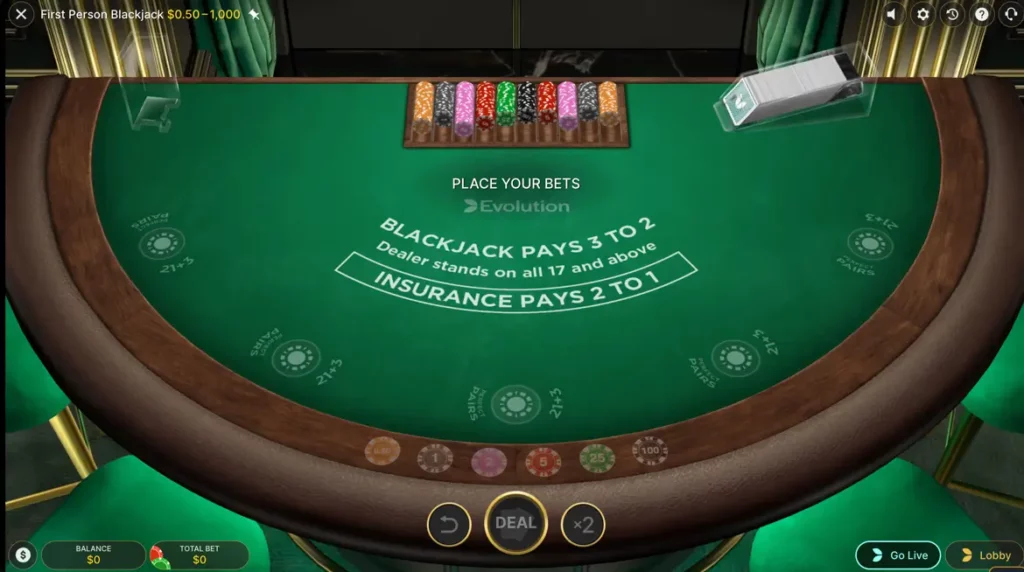
| Item | First Person Blackjack |
|---|---|
| Game type | Digital blackjack (RNG) |
| View style | First-person table perspective |
| Pace | Fast, player-controlled decision speed |
| Bets | Standard blackjack bets (plus side bets if enabled) |
| RTP / house edge | Depends on ruleset (check in-game rules) |
| Best for | Players who want blackjack without live dealers |
First Person Blackjack is a digital blackjack format that mimics the look and flow of a real table, but the dealing and outcomes are generated by software rather than a live dealer. You still make the same decisions—hit, stand, double, split, and sometimes surrender—just with quicker rounds and consistent pacing.
How it plays
The “first person” part is mostly presentation: you see the table from a seated position, chips and cards are animated in front of you, and the interface is built to feel like a casino session. Because it’s RNG-based, rounds typically start immediately and resolve quickly, which suits players who want volume and minimal waiting.
Rules and decision options
Most versions follow standard blackjack rules, but the exact house edge depends on specifics like how many decks are used, whether the dealer hits or stands on soft seventeen, whether double-after-split is allowed, whether re-splitting is allowed, and whether surrender exists. These small rule differences matter more than the visual style, so always treat the rules panel as the source of truth for the table you’re playing.
Side bets and table settings
Some First Person Blackjack tables include optional side bets (for example, pair-based bets or three-card totals), while others keep it strictly classic. Side bets usually have a higher house edge than the main game, so if you care about efficiency, it’s worth knowing whether they’re included and what their paytables look like.
RTP, fairness, and what to verify
RTP/house edge is not universal across “First Person Blackjack” because casinos can offer multiple rule sets under similar names. Quick checklist (one list):
- Number of decks
- Dealer hits/stands on soft seventeen
- Double rules (any two cards vs restricted totals)
- Split rules (re-splits, double after split)
- Surrender availability
- Blackjack payout (3:2 vs 6:5)
Who it suits
First Person Blackjack is best if you like blackjack decisions but don’t want the slower tempo of live tables. It’s also useful for practicing strategy habits because the pace is consistent and the interface usually makes options obvious, while still keeping the core game recognizable and easy to follow.